If you are planning a landed rebuild or addition and alteration (A&A) works on an older house, you will likely need an asbestos survey Singapore homeowners arrange before demolition or renovation starts. The Ministry of Manpower (MOM) requires that survey for any building work in a building built before 1 January 1991. Building work here means demolition of a building, or the alteration, addition or repair of a building.
If asbestos-containing materials (ACM) are present and you are about to demolish the house, or disturb those materials, only a MOM-approved asbestos-removal contractor may remove them, and that work has to finish before demolition starts. This article follows official MOM, Workplace Safety and Health (WSH) Council, National Environment Agency (NEA) and Building and Construction Authority (BCA) sources. It does not invent fees or durations, because the official pages do not publish those figures.
Why Older Landed Houses May Still Contain Asbestos
Asbestos is a group of fibrous minerals once widely used in building materials because it resisted heat and fire. Official sources are clear about the risk: inhaling the fibres can cause serious diseases, including asbestosis, mesothelioma and lung cancer, which can take many years to appear.
Singapore prohibited the use of asbestos in buildings in the late 1980s. The WSH Council’s Guidelines on Management and Removal of Asbestos (2014) dates that ban to 1988, when the Building Control Division, now BCA, stopped the use in buildings. A WSH Council flyer refers to buildings built before 1989, while NEA and MOM both say “late 1980s”. The legal date that triggers a survey is later: 1 January 1991.
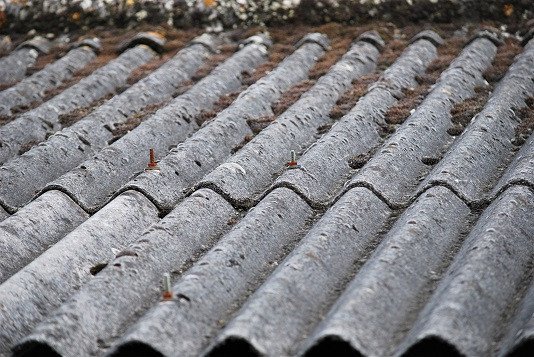
Older landed houses can still contain ACM. Official examples include corrugated roof sheets, ceiling boards, wall partitions and cladding, insulation boards, roofing felt, rubbish chutes, floor vinyl sheets or tiles, pipe insulation, acoustic panels, ventilation panels, gutters, water tanks and underground pipelines. The WSH Council’s Annex A list is longer and is not exhaustive, so a competent surveyor still has to inspect the areas your works will affect. If the materials are intact and left undisturbed, MOM says the risk of exposure is very low. Cutting, drilling, scraping or demolition can release fibres. Do not start pulling down walls, ceilings, flooring or fittings in an older house until the survey is done.
When an Asbestos Survey Singapore Is Required
Houses dated before 1 January 1991
MOM’s plain-language rule is that you must conduct an asbestos survey before demolition, alteration, addition or repair work in a building built before 1 January 1991. That includes a typical landed house renovation, not only a full rebuild.
The Workplace Safety and Health (Asbestos) Regulations 2014 use a more precise test. The duty applies to building works relating to a building, or any part of a building, for which no certificate of statutory completion (CSC) or temporary occupation permit (TOP) was issued on or after 1 January 1991. Your Qualified Person (QP) should date the house from the CSC or TOP, not only from the year you think it was built. The employer of the people who will do the work, or the principal under whose direction they will do it, must appoint a competent person to survey the building. Building works must not start until that employer or principal has received the survey report.
Specified materials, even in a later building
A survey is also required for work involving any material listed in the First Schedule to the Regulations, unless the employer or principal has documentary proof that the material does not contain asbestos. Those specified materials are cable penetration insulation; fire protection board, panel, wall and door; gasket; refractory lining; sprayed insulation; and thermal insulation of a pipe, boiler, pressure vessel or process vessel. MOM notes that a building completed after 1 January 1991 is unlikely to contain ACM, though you can still engage a surveyor if you want to be sure. The Commissioner for Workplace Safety and Health can also order a survey of a later building if there is reason to believe asbestos may be present.
A&A of part of the house
If you are only working on part of the house, you do not have to survey the entire building. MOM says the survey must cover all the areas undergoing renovation, and that areas not affected by the works may be excluded. For a full demolition, the survey has to establish whether asbestos or ACM is fixed or installed in the building that will come down.
Who Can Carry Out the Survey, and What It Involves
Only a competent person may conduct the survey. Under the Regulations, that means someone with sufficient experience and training who has successfully completed the course the Commissioner requires for that work. For survey work, MOM states that the asbestos surveyor must have successfully completed the WSQ Survey Asbestos and Other Fibres Risk Course.
MOM publishes a list of companies offering asbestos survey services. An asbestos survey Singapore owners use to shortlist a firm should still start from that list, but only as a reference. MOM says the list is not exhaustive, does not amount to a recommendation, and was last updated on 30 June 2026. Confirm that the person who will actually do your survey has completed the required course.
A visual walk-through is not enough if you are about to renovate or demolish. MOM says the surveyor must take samples of suspected ACM, with the consent of the owner or occupier, and send them to a recognised testing body for laboratory analysis. Visual inspection can only rule out non-composite materials such as glass, metal or wood. The competent person must then prepare a survey report without delay, and submit the report and test results to the employer or principal within three months after being appointed. That is a legal deadline for delivering the report, not a typical survey duration, which official pages do not state. Building works still cannot start until the employer or principal has received the report. The employer or principal must keep the report and results for at least two years after receiving them.
If Asbestos-Containing Materials Are Found
When removal can wait
Finding ACM does not automatically mean you must strip it out the next day. If you are not renovating or demolishing, and the materials are intact and undisturbed, MOM says you do not need to remove them immediately, because the risk of exposure is then very low. If the materials are damaged, MOM says you should have them removed immediately. If renovation will affect them, you should consider removal. Where ACM will remain in place for a time, MOM also advises an asbestos management programme, including awareness training for people working near the materials, and immediate corrective action if anything is damaged.
Who must carry out the removal
If you are demolishing the house, or the works will disturb the ACM, plan the removal as part of the project. Only an approved asbestos-removal contractor (AARC) may undertake asbestos-removal work, which the Regulations define as work that takes asbestos or ACM from its place of installation. The occupier of the workplace must ensure that an AARC, and no other person, does that work. You can find approved contractors on MOM’s Find an asbestos removal contractor page.
The AARC must notify MOM at least one week, or at least seven days, before the removal work starts, or within any shorter period the Commissioner allows in a particular case. The notification must include the asbestos-removal plan of work and the asbestos survey result. A competent person appointed by the AARC prepares that plan, supervises the work and ensures that only trained personnel carry it out. The plan has to set out the location and method of work, fibre-control and decontamination measures, waste storage and disposal, monitoring of asbestos levels, and emergency procedures.
What happens on site, and after the work
MOM does not have to inspect the site before removal can begin, but it may inspect during the period stated in the notification. After the work is completed, the AARC must update the notification with the asbestos waste disposal certificate and submit an air monitoring report. The WSH Council guidelines also call for an air clearance check after the work area has been cleaned, especially after removal of friable ACM and of non-friable ACM indoors, before the enclosure comes down. For a demolition, the employer or principal must ensure, so far as is reasonably practicable, that the AARC finishes the removal before demolition starts.
BCA’s Be Good Neighbours guide for landed owners, amended in October 2025, tells you to remind your builder or engineer to check for asbestos, engage a competent contractor if it is present, see that MOM is notified, have the material removed before renovation or demolition, and tell affected neighbours and advise them to stay away while the removal is carried out.
How the waste must leave the site
Asbestos waste from demolition and renovation is listed toxic industrial waste under the Environmental Public Health (Toxic Industrial Waste) Regulations. NEA requires the contractor responsible for the waste to engage a licensed toxic industrial waste collector (TIWC) that is licensed to handle asbestos. The waste, and disposable items used in the removal, must go into sealed, labelled containers or bags. Vehicles must have enclosed compartments or canvas, and compactors must not be used. The containers must be barged directly to Semakau Landfill, and collectors need NEA’s written permission to dispose of the waste there. Use NEA’s current asbestos waste page and its published list of licensed collectors, rather than an old shortlist, because the names can change. If you see illegal disposal of asbestos waste, MOM says to contact NEA through its online feedback form or at 6225 5632.
How This Affects Your Rebuild Timeline
Official pages do not state how long an asbestos survey Singapore owners commission will take, or what it should cost. They do fix the order of work, which you should build into the programme with your QP and builder.
Confirm the CSC or TOP date and whether any specified materials will be involved. Have the employer or principal appoint a competent asbestos surveyor, and do not start demolition or A&A until the survey report is in hand. If the report finds ACM that the works will disturb, or if the house is to be demolished, engage an AARC. That contractor must prepare a plan of work, notify MOM at least seven days before removal starts, complete the removal, so far as is reasonably practicable, before demolition starts, and then submit the waste disposal certificate and air monitoring report to MOM. Only then should the demolition or the affected A&A works proceed.
That sequence sits with other early official checks for a landed rebuild, such as buying the sewerage and drainage interpretation plans your QP will also need. Leaving the survey until after a demolition date is booked can stall the site, because the law does not allow the building works to start first.
Who Is Responsible
MOM summarises the legal roles this way. The employer or principal must appoint a competent person for any required asbestos survey, and must ensure that ACM is removed before buildings are demolished. The occupier must ensure that an AARC undertakes any asbestos removal. On a landed rebuild, those roles usually fall on the builder or another contractor directing the work, and on the occupier of the site. The owner still needs to make sure the appointments happen in time, which is the practical advice in BCA’s landed-owner guide. Do not treat removal of installed ACM as a DIY or ordinary renovation task.
Cleaning an asbestos roof or painting over asbestos materials does not require an AARC, but MOM still requires the contractor doing that work to include the asbestos hazard in the risk assessment, train the workers, provide respiratory protection, prepare a safe work procedure to minimise fibre release, and have a contingency plan if the materials break. If you are not sure, MOM says you can engage an AARC for that work as well.
Official penalties
A person who, without reasonable excuse, contravenes core duties such as starting building works without the survey, failing to use an AARC, or failing to ensure, so far as is reasonably practicable, that removal is completed before demolition, is liable on conviction to a fine not exceeding $50,000, or to imprisonment for a term not exceeding two years, or to both. An AARC that, without reasonable excuse, fails to notify MOM at least seven days before the work is liable to a fine not exceeding $20,000, or imprisonment for a term not exceeding two years, or both, with higher fines for a repeat offender. Those figures come from regulation 23 of the WSH (Asbestos) Regulations, as in force from 1 June 2024. A person who contravenes the Environmental Public Health (Toxic Industrial Waste) Regulations is liable on conviction to a fine not exceeding $10,000 and, for a continuing offence, a further fine not exceeding $100 for every day or part of a day after conviction.
A Homeowner Checklist Before Demolition or A&A
Work through this list with your QP and builder before anyone starts opening up the house:
- Confirm the CSC or TOP date. If none was issued on or after 1 January 1991, arrange a survey before demolition or A&A.
- If the works involve a First Schedule material, arrange a survey unless you have documentary proof that it does not contain asbestos.
- Appoint a competent surveyor who has completed the WSQ Survey Asbestos and Other Fibres Risk Course. Use MOM’s list only as a starting point.
- For a rebuild, or for A&A that will disturb suspected materials, make sure the survey includes sampling and laboratory testing. Limit an A&A survey to the areas being worked on, and do not start those works until the report has been received.
- Keep a copy of the report and test results. The employer or principal must keep them for at least two years.
- If ACM is found and the works will disturb it, engage a MOM-approved asbestos-removal contractor, not an ordinary demolition crew.
- Check that the AARC has notified MOM at least seven days before removal starts, with the plan of work and the survey result, and that a competent person will supervise the work.
- Tell affected neighbours about the removal and advise them to stay away while it is carried out, as BCA recommends.
- Confirm that an NEA-licensed TIWC licensed for asbestos will take the waste, and that the disposal certificate and air monitoring report will go back to MOM. Do not start demolition until the required removal is complete, so far as is reasonably practicable.
Frequently Asked Questions
Do I need an asbestos survey Singapore if I am only doing A&A, not a full rebuild?
Yes, if the building was built before 1 January 1991, or if it has no CSC or TOP issued on or after that date. MOM says the survey must cover the areas undergoing renovation. Areas that the works will not affect may be excluded.
Is a visual inspection enough?
Not if you are renovating or demolishing. MOM says the surveyor must take samples of suspected ACM and send them for laboratory testing. Visual inspection can only rule out non-composite materials such as glass, metal or wood.
If my house was built after 1 January 1991, can I skip the survey?
Usually, unless the works involve a specified material and you do not have documentary proof that it is asbestos-free. MOM says a building built after 1 January 1991 is unlikely to contain ACM, though you can still engage a surveyor if you want confirmation.
Do I have to remove asbestos immediately if I am not renovating?
Not if the materials are intact and undisturbed. MOM says the risk of exposure is then very low. If the materials have been damaged, MOM says you should have them removed immediately, and only by an approved asbestos-removal contractor.
Who removes the asbestos, and how is MOM notified?
Only a MOM-approved asbestos-removal contractor may carry out asbestos-removal work. That contractor must notify MOM at least one week, or at least seven days, before the work starts, and must submit the plan of work and the survey result. After the work, the contractor submits the waste disposal certificate and the air monitoring report.
How is asbestos waste disposed of?
It is toxic industrial waste. The contractor must engage an NEA-licensed toxic industrial waste collector that is licensed to handle asbestos. NEA requires the waste to be sealed, labelled and barged directly to Semakau Landfill. Report illegal disposal to NEA at 6225 5632 or through NEA’s online feedback form.
How much does an asbestos survey or removal cost, and how long does it take?
Official MOM, WSH Council, NEA and BCA pages checked on 23 November 2026 do not publish a standard survey fee, removal fee or typical duration. Ask a competent surveyor and, if needed, an approved removal contractor for a written quote. The only official time marks are the duty to have the report before building works start, the three-month deadline for the surveyor to submit the report after appointment, and the requirement for the AARC to notify MOM at least seven days before removal starts.
Plan the Survey Before Demolition Is Booked
At Three E Building Construction, we build landed home rebuilds, extensions and A&A works. We work with your architect and engineers so the survey, any approved asbestos removal and the later demolition sit in the right order on site. If you are planning a landed house, talk to 3E Build. Builder with Integrity.