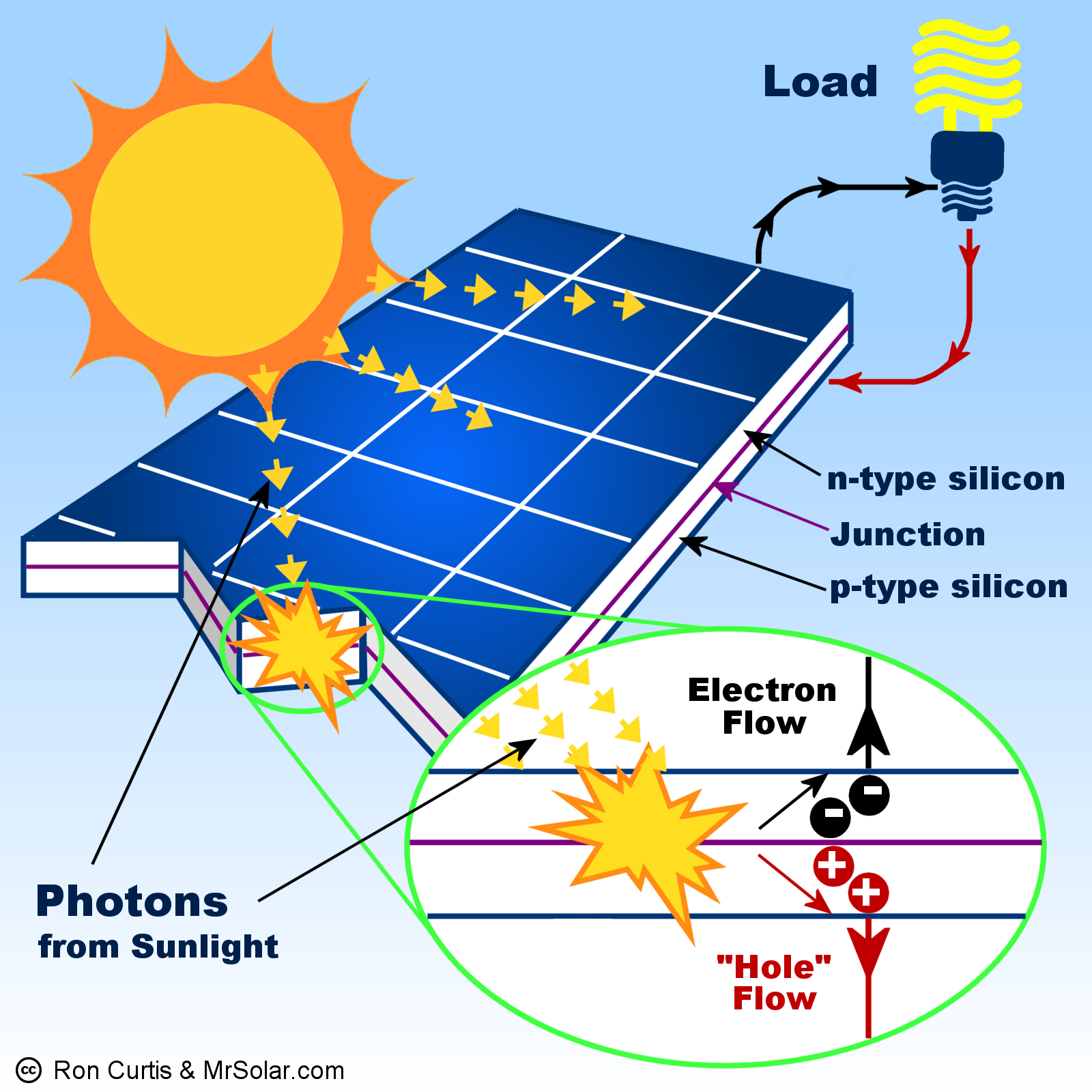
On 27 October 2026, the Energy Market Authority (EMA) announced a new national solar target. The target is 4 gigawatt-peak of solar by 2035. The same release singles out private residential landed properties. EMA has also signed a memorandum of understanding with the Sustainable Energy Association of Singapore. They will explore a one-stop digital portal for homeowners. EMA will also work with the Energy Research Institute at NTU to map grid capacity in landed residential estates. That is the official backdrop for a solar panel Singapore landed decision today. It applies whether you are rebuilding, doing addition and alteration (A&A) works, or retrofitting an existing roof.
This article follows official EMA and SP Group sources, as checked on 24 November 2026. It also follows the Building and Construction Authority (BCA), the Urban Redevelopment Authority (URA) and the Singapore Civil Defence Force (SCDF). A clearly dated yield figure from the Solar Energy Research Institute of Singapore (SERIS) is cited as well. The article does not invent installation prices, payback periods or typical system sizes. Where official pages do not publish a figure, that is stated plainly.
Why Bill Savings Still Matter After the Q4 2026 Tariff Cut
For the period from 1 October 2026 to 31 December 2026, SP Group’s household electricity tariff fell. The official media release of 30 September 2026 gives the size of the cut. The tariff, before GST, decreased by 10.4%, or 3.32 cents per kWh, compared with the previous quarter. The fall came from lower energy costs. The same release also carries a warning. Global fuel prices have risen since September 2026. If that persists, electricity tariffs are expected to increase for the subsequent quarter.
The current official rate is in SP Group’s tariff tables and in Appendix 2 of that release. For low-tension domestic supplies, all units are 28.59 cents per kWh before GST. With 9% GST, the rate is 31.16 cents per kWh. Both figures apply from 1 October to 31 December 2026. Appendix 1 shows the four components before GST. Energy costs are 22.18 cents. Network costs are 6.10 cents. The market support services fee is 0.23 cents. The market administration and power system operation fee is 0.08 cents.
SP Group’s Appendix 3 also publishes average monthly consumption and bills, before GST, at the new tariff. A terrace has an official average of 844.17 kWh a month and a new average monthly bill of $241.35. A semi-detached house has an official average of 1,070.40 kWh and $306.03. A bungalow has an official average of 2,162.40 kWh and $618.23. Those are averages, not a forecast for your house.
A solar panel Singapore landed system does not automatically wipe out those official average bills. Solar generation happens in daylight. Night-time demand still comes from the grid, unless you add storage. The valuable unit is the unit you use yourself, because it replaces the full tariff. Excess units exported to the grid are paid on a different official basis. That payment is lower than the full tariff once the grid charge is taken off.
How a Landed Rooftop System Is Paid
SP Group’s Solar PV User Guide for Residential Consumers, dated December 2022, sets out the basic flow. The solar energy produced is first offset by consumption at the same premises. Only excess energy exported to the grid is paid for. A Licensed Electrical Worker (LEW) must carry out the electrical work and submit the connection documents to SP Services.
If you buy electricity from SP Group at the regulated tariff, you are a non-contestable consumer. The official payment for exported units is then clear. It is the prevailing low-tension electricity tariff minus the grid charge. The payment is a credit adjustment on the monthly electricity bill. SP’s guide calls this the Simplified Credit Scheme. Official EMA materials use the related term Simplified Credit Treatment. Official tariff pages checked on 24 November 2026 do not republish a ready-made export rate in cents for this quarter. The formula, however, is official: the prevailing low-tension tariff minus the grid charge. The current low-tension domestic tariff is 28.59 cents per kWh before GST. The network cost component is 6.10 cents per kWh before GST. That component recovers the cost of transporting electricity through the power grid. The sources fetched for this article do not expressly equate that 6.10-cent network component with the “grid charge” used in the export formula. This article therefore does not invent an export rate by subtracting the two figures.
If you buy electricity from an Open Electricity Market retailer, you are a contestable consumer. Residential contestable consumers with a solar PV system of less than 10 MWac have another official route. They may sell excess output through SP Services under the Enhanced Central Intermediary Scheme (ECIS). SP Services acts as the central intermediary. Excess solar electricity sold back to the grid is paid the weighted average nodal price. Relevant market charges are passed through. Official pages do not publish a fixed ECIS cents-per-kWh rate, because the wholesale price changes.
Licensing is usually straightforward on a house. The electricity licensing threshold is based on the aggregate AC inverter capacity at the point of connection to the grid. Below 1 MWac, a grid-connected system is exempted from a generation licence or a wholesaler (generation) licence. A landed-house system sits far below that official threshold. An Electrical Installation Licence is also not required for electrical installations used exclusively for domestic purposes, except in multi-metered premises. A LEW is still required. It is an offence to carry out electrical work without a valid electrical worker licence. It is also an offence to engage someone who is not a licensed electrical worker, if you do so knowingly.
A Worked Example Using Only Verified Figures
A fair solar panel Singapore landed savings example has to start from verified numbers. It should not start from an invented system size or payback. The two figures used here are the official Q4 2026 household tariff, and a clearly cited typical first-year yield from SERIS.
The Ministry of Energy, Trade and Industry updated its solar page on 21 August 2026. It says Singapore has an average annual solar irradiance of 1,580 kWh/m²/year. It also records that Singapore has achieved the 2025 target of 1.5 gigawatt-peak of solar. The country is on track to meet a target of at least 2 GWp by 2030. The National Climate Change Secretariat, updated on 28 September 2026, uses the same 1,580 kWh/m² irradiation figure. It also notes high cloud cover and urban shading as challenges. Those official pages state irradiance, not a ready-made kWh-per-kWp yield.
A cited typical yield is available from SERIS. SERIS set out a typical yield in its Solar Economics Handbook of Singapore, dated December 2019. It used a 78% performance ratio and a P50 average irradiance of about 1,644 kWh/m². On that basis, it stated a first-year energy yield of about 1,282 kWh/kWp. That is a research-institute figure from 2019. It is not a 2026 government planning figure. It also used a higher irradiance assumption than the official 1,580 kWh/m²/year quoted in 2026. Actual yield varies with roof tilt, orientation, shading, soiling and system design.
Hold the Q4 2026 tariff constant for a moment, only as an illustration. Suppose 1 kWp produced 1,282 kWh in a year, and every unit replaced grid electricity. The bill offset would be 1,282 × 28.59 cents, or $366.52, before GST. With 9% GST, the same arithmetic at 31.16 cents is $399.47. That is an illustration, not a forecast. The tariff is revised every quarter. Official pages do not say that a landed house will self-consume all of its solar generation. Units exported to the grid are paid at the official export formula, not at the full tariff. A 2026 PV Doctor press release, from a SERIS spin-off, also reports that residential systems tend to underperform projections. It points to roof tilt angles that are poorly aligned with equatorial conditions. It also points to shading from surrounding structures and vegetation.
You can also read the official average bills against that illustration. The official average terrace figures line up with the tariff. At 28.59 cents per kWh before GST, 844.17 kWh a month produces the official average bill of $241.35. Solar cannot be assumed to cancel that whole average, because demand continues after sunset. Official pages do not publish a standard self-consumption share for a landed house. They also do not publish a standard installed cost or a standard payback period.
Fitting Solar During a Rebuild, Against a Retrofit
The approvals path changes slightly if the panels come with a new house, rather than being added later. SCDF says a solar PV installation that comes with any new building project shall be submitted with all other fire safety works. For an existing building, the plan can be submitted under the Minor Additions and Alteration lodgement scheme. There is an important official exemption for many landed houses. Fire safety plan submission is exempted for many landed houses. The house must be a residential detached, semi-detached or terrace house. It must not exceed three storeys or three levels, including basement and attic. It must also not share any facility with any other building. A house above that height, or one that shares facilities, does not get that exemption.
Even where plan submission is exempted, SCDF still has fire safety requirements for roof-mounted PV. Its Fire Safety Requirements for Solar Photo-Voltaic Installations on Roof, FSR 13:2015, take effect from 1 July 2016. They are to be read with the Fire Code. Among those requirements, a minimum fire resistance rating of Class C shall be provided for any roof-mounted PV module. Your Qualified Person (QP) should confirm which of the remaining access, clearance and array rules apply to your roof.
A rebuild is also the practical time to think about the roof itself. URA’s current semi-detached handbook was last updated on 20 July 2026. It says the installation of solar panels and M&E equipment, such as inverters, does not require planning permission, except in stated locations and contexts. Planning permission is required in areas subject to urban design guidelines and in Conservation Areas. That is because of the impact on the roofscape. A solar panel is deemed elevated if it is raised more than 1 m from the roof level on a landed house. The test is more than 1.8 m on other developments. Elevated panels in residential and other listed zones require planning permission. If they need permission, they may be assessed as an additional storey. That extra-storey treatment does not apply if two official tests are met. The panels must stay within the 45-degree line from the springing line of the roof. They must also sit no more than 1 m above roof level on a landed house. URA’s GFA page was last updated on 6 June 2026. The area shadowed by a solar panel is excluded from GFA, unless that area is enclosed, used for commercial uses, or used for storage.
On structure, GoBusiness sets out BCA’s plan-submission rule. Your QP has to apply for approval of structural and building plans in several official cases. Those cases include structural strengthening. They also include a support base for the panels that exceeds 2.5 m in height. The same rule covers solar panels that also function as a roof shelter covering more than 10 square metres, or any other new building works under the Building Control Act. Certain building works are exempted from plan submission. It is advisable to consult a Professional Engineer (PE) for civil and structural works to ascertain whether strengthening is needed. Lightning protection for the modules and control panels must also comply with SS555:2018.
That is why a rebuild can be the cleaner route for a solar panel Singapore landed installation. Official pages still do not publish a cost comparison. The PE can check the roof structure before it is built. The architect can consider tilt, shading and access while the envelope is still on the drawing board. Conduits, inverter space and a later battery or EV charger can be allowed for. They then do not have to be chased through a finished house. A retrofit remains entirely possible. The same LEW, SP connection, structural check and planning tests still apply. The wider approval path for the house itself is set out in our guides. See house reconstruction in Singapore, landed house renovation approval and envelope control.
Batteries and EV Chargers, in Brief
On 26 October 2026, EMA launched an Energy Storage Systems Vision and an industry consultation. Singapore aims to triple energy storage capacity from about 350 megawatt-hours today to around 1 gigawatt-hour by 2030. Officially, energy storage can help the power system respond to solar fluctuations. It can also support local demand, including electric vehicle charging, when network capacity is limited. EMA also points to smaller systems. Energy storage in homes, businesses and electric vehicles could be coordinated to support the power system, including through Virtual Power Plants.
That is an official national direction, not a published household rebate or a standard home-battery saving figure. Official pages checked for this article do not publish a typical home-battery cost or a typical extra bill saving. They also do not require a landed-house solar system to be paired with a battery or an EV charger. If you want storage or a charger, ask the PE and the LEW to design for it. That includes the electrical installation, the grid connection and any future market arrangements. Do not treat a sales brochure payback as an official figure.
What to Ask Your Builder, QP, PE and LEW
These questions help you test a solar panel Singapore landed proposal against official rules. They also help you avoid relying on an invented savings claim.
- Has a PE reviewed the roof structure? Is BCA plan submission required for strengthening, a support over 2.5 m, or a roof shelter over 10 square metres?
- Does the house sit in a Conservation Area or an urban design area? Are the panels elevated more than 1 m above roof level?
- Is fire-plan submission required? Does the house fall within SCDF’s exemption for landed houses of not more than three storeys or levels that do not share facilities?
- Will the modules meet the official Class C fire-resistance rating, and will lightning protection comply with SS555:2018?
- Who is the appointed LEW, and has the SP connection pack been prepared, including the net export rebate form?
- Will you buy electricity from SP Group or from a retailer? Is the export scheme therefore the Simplified Credit path or ECIS?
- What first-year yield, in kWh per kWp, has the designer used? How does it sit against the dated SERIS figure, and against your roof’s tilt and shading?
- Which share of generation is assumed to be self-consumed? Is that assumption stated as an estimate, rather than as an official figure?
- If a battery or EV charger is proposed, what official or manufacturer basis is being used? Official pages do not publish a standard household saving.
- What is the installed price in the quotation? Official sources do not publish a standard solar panel cost. The figure has to come from the named supplier’s written quote.
Frequently Asked Questions
Do I need planning permission for solar panel Singapore landed roofs?
Usually not, if the panels sit close to the roof. The house must also not be in a Conservation Area or an urban design area. URA’s current guidelines set the exceptions. Planning permission is required if the panels are raised more than 1 m from the roof level on a landed house, in the listed zones. It is also required if the space under the panels is enclosed or put to commercial or storage use.
How much can I save on my electricity bill?
It depends on how much electricity the system actually generates, and on how much of that you use yourself. At the official Q4 2026 tariff, each self-consumed kWh replaces 28.59 cents before GST, or 31.16 cents with 9% GST. Use SERIS’s December 2019 first-year yield of about 1,282 kWh/kWp as an illustration. Assume every unit is self-consumed, and hold that tariff constant for a year. Then 1 kWp would offset $366.52 before GST, or $399.47 with GST. That is an illustration only. Official pages do not publish a standard landed-house saving or payback.
Can I sell excess solar electricity back to the grid?
Yes. If you buy electricity from SP Group at the regulated tariff, exported units are paid at the prevailing low-tension tariff minus the grid charge. The payment is a credit on the bill. If you buy from a retailer, ECIS pays the weighted average nodal price, and market charges are passed through. Official pages do not publish a fixed export rate in cents for ECIS. They also do not publish a ready-made export rate for this quarter under the credit scheme.
Do I need an EMA generation licence for a house system?
Not if the aggregate AC inverter capacity is below 1 MWac, which covers a normal landed-house system. The system is then exempted from a generation licence or a wholesaler (generation) licence. A LEW is still required. Electrical installations used exclusively for domestic purposes, except multi-metered premises, are also exempted from an Electrical Installation Licence.
Is fire safety plan submission required on a terrace or semi-detached house?
SCDF exempts fire safety plan submission for many landed houses. The house must be a residential detached, semi-detached or terrace house of not more than three storeys or three levels, including basement and attic. It must also not share any facility with any other building. If the panels come with a new building project, they are otherwise submitted with the other fire safety works. For existing buildings outside the exemption, the plan can be lodged under the Minor Additions and Alteration scheme. Fire safety requirements for roof-mounted PV still need to be checked.
Should I add a home battery or an EV charger at the same time?
Official policy is moving in that direction, but official pages do not publish a standard household saving for either. EMA’s 26 October 2026 storage vision is relevant here. It says systems in homes and electric vehicles could later be coordinated to support the power system. Ask your PE and LEW whether the electrical design should allow for them. Do not rely on an unofficial payback figure.
Is it better to install solar during a rebuild than to retrofit later?
A rebuild lets the PE, architect and LEW deal with those issues early. Structure, tilt, access, planning height and cabling can be settled before the roof is finished. A retrofit is still workable under the same official tests. Official pages do not publish a cost difference between the two routes. If you are already planning a rebuild or A&A, it is the practical time to ask the question.
Plan the Roof While the House Is Still Being Designed
At Three E Building Construction, we build landed home rebuilds, extensions and A&A works. We work with your architect and engineers on the sequence. A rooftop solar layout, the structural check and the construction programme then sit in the right order. If you are planning a landed house, talk to 3E Build. Builder with Integrity.